
News
Field Trips: Navigating Welcome and Unwelcome Disruptions April 30, 2026 13:16

On Tuesday morning, the majority of our student body at our high school hopped on a fleet of school buses and headed downtown to the Indiana Repertory Theatre to see the musical Come From Away.
This musical takes place in a small town in Newfoundland. On September 11, 2001, several planes that were flying to the U.S. were diverted and grounded at the Gander airport because of the terrorist attacks.
Come From Away focused on the people of this town and those who were stranded there over the course of several days.
What I liked about this performance is it didn’t focus on planes crashing into the Twin Towers, or the turmoil and trauma that ensued. Instead, it focused on ordinary people living their ordinary lives until an unexpected disruption encouraged everyone to pivot and come to the aid of thousands of strangers.
Citizens of Gander took these stranded passengers into their homes. They shared their food and clothing; they gave them warm places to shower, sleep, and take shelter from the fear and uncertainty of this devastating disruption.
Strangers helped strangers, and the common denominators for navigating this situation were connection, interconnection, kindness, and compassion.
The actors and musicians in this production were incredible, and our students thoroughly enjoyed this performance. I was very grateful we were able to experience it together.
***
Field trips are welcome disruptions. Successful ones require careful planning, and this trip was definitely a success. It was an organized, well-choreographed learning opportunity that involved permission slips, ticket sales, calls to the Ed Center and Transportation department. It required the help of bus drivers, cafeteria staff, administrators, teachers, substitutes, chaperones, and, of course, students. Many hearts and hands worked together to make this adventure possible, and it took time, effort, and careful planning. At the core of all of this, what made this trip a success is interdependence.
Ironically, all this planning for a welcome disruption took us to a production (that was also carefully planned, organized, and choreographed) that focused on an unexpected disruption, the 9/11 attacks, which led to a series of even more unexpected disruptions.
Ah, samsara! Samsara, or cyclic existence, is all about navigating all kinds of disruptions—whether they are planned, unplanned—big or small—positive, negative, or neutral—we are constantly pivoting, adapting, and transforming to accommodate constant change.
***
Thankfully, we returned to school safely in the early afternoon. The cafeteria staff hustled to feed 300 hungry students in three, tightly-staggered lunch shifts.
Our students found this musical riveting and powerful; many were curious about 9/11 as this tragedy occurred before they were born. Some asked their teachers about what they remembered about this day—where they were and what they were doing.
I told a student about my own experience. I had been teaching full-time at Ben Davis H.S., and we were I-STEP testing on that day. I had proctored the first session of tests; another teacher came to my room so that I could deliver the test booklets to the office.
When I walked into the Guidance Office, several teachers and counselors were gathered around a large television strapped to a cart. The first plane had crashed into the North Tower, and we all watched in silence as smoke billowed from the building. It was a surreal experience.
I walked back to my classroom with a huge knot in my throat. I knew something horrible had happened, and my students had no idea…yet. I remember looking at them and knowing that things would change dramatically for all of us on that day. We were instructed not to say anything yet. Our principal would make an announcement shortly afterwards.
I also remember students begging me to turn on the Dukane projector after his announcement (at that time, we had schoolwide access to some television channels via internet). They wanted to watch—and I declined. I told them that is all that they would see on television later on and for many days to come, and I didn’t want to bring it into the classroom. They were mad at me, but looking back, I’m glad I didn’t play news coverage at that time. That would have been a disturbing, traumatic, anxiety-producing disruption that I was not ready, or willing, to expose my students to.
We talked about it, wrote about it, and processed it in the coming days and weeks, but I didn’t want to inundate them with tragic news in real time. Besides, high-stakes state testing followed by tragic national news—that’s not a good combination!
***
Successfully dealing with disruptions requires a willingness to let go of expectations and an aspiration to focus on benefiting others. Having a minute to take a breath and pausing before taking action can be helpful, too.
May you pivot, adjust, adapt, and transform with skill and grace today—and in the coming days and weeks. May you treat others with compassion, kindness, and patience as we all deal with whatever disruptions come our way.
***
Thank you for taking the time to read this month’s blog offering. If you’re in the Indianapolis area and can catch a performance of Come From Away, I highly recommend it. The show runs until May 10th at Indiana Repertory Theatre.
I’ve also added a few new mala designs to the online shop. Mother’s Day is coming soon, too, and malas make thoughtful gifts for mamas who meditate. Meditation is also a wonderful way of dealing with disruptions, by the way.
Take care,
T

Change Is Fantastic! Reframing Unexpected Surprises, Detours, and Obstacles October 30, 2023 18:15
If you prefer to listen to this month's blog offering, please click HERE for the audio link.
I was driving in the car, headed to a dental appointment a few weeks ago. I was half-listening to an NPR interview with a scientist. I was taking an alternate route due to a massive construction project on I-465 and was laser-beam focused on driving. However, I heard a phrase that made me stop, literally, and pay attention.
The scientist being interviewed said, “Change is fantastic!”
My first thought was, that would make an excellent mantra! What a wonderful way to reframe unexpected surprises, detours, and obstacles.
Hearing this woman’s words changed (for the better) the rest of my commute. I was no longer thinking about the extra time that this alternate route was taking. Instead, I was able to appreciate the light traffic and fall scenery. My trip felt more like an adventure and an exploration than an inconvenience.
Not only did I arrive a few minutes early for my appointment, but I also discovered a new route in the process.
***
Most of us find change to be an unnerving, annoying inconvenience—sometimes, change can even seem terrifying. We often have a negative reaction to change, especially if we have expectations or attachments connected to the situation.
We leave for work only to discover our car has a flat tire.
We spill coffee on our laptop.
The power goes out in the middle of our Zoom meeting.
These unexpected twists and turns can, and do, happen at times, but humans are resilient. We are designed to adapt because we live in a world where change is a constant, unpredictable companion.
The good news is, the more we practice reframing unexpected changes with the mantra, “Change is fantastic!” the more effectively we can navigate even more serious changes like illness, death, natural disasters, and war.
***
The natural world is a beautiful reminder of the perpetual and cyclic nature of change.
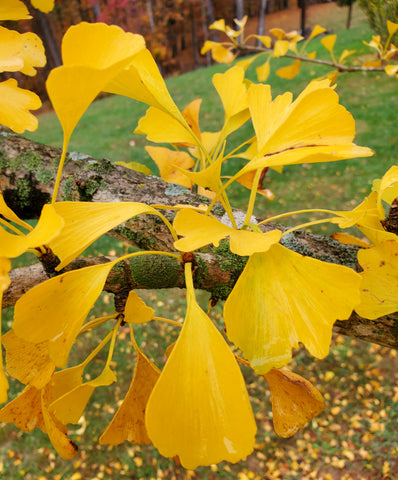
At this time of year, deciduous trees in my town are bursting with color, and I love watching their leaves flutter to the ground. Soon, the air will be cold, and their branches will be bare—there is beauty in bare branches, too.
Change is Fantastic!
Flocks of birds are migrating south. Collectively, they undulate in waves across darkening skies streaked with the bold colors of autumn sunsets.
Change is Fantastic!
The squirrels in my yard are busy collecting and hiding acorns for the upcoming winter months. They, too, are preparing for fantastic changes.
***
Granted, some changes are easier to appreciate than others.
Celebrating birthdays, weddings, anniversaries, and graduations are just a few examples. It’s easy to recognize and rejoice the fantastic nature of these milestones.
I’ve worked in a high school setting for over three decades, and while most seniors look forward to graduation at the end of the school year, each year there are a few who dread it. These students have grown attached and accustomed to school life—the structure, the expectations, the routines and schedules. Even though they may complain about the workload (or the food in the cafeteria), school for them is predictable, familiar, and safe.
Some students are so resistant to change that they sabotage their own future success by failing key classes so they can’t graduate. For them, moving forward into new situations, opportunities, and circumstances is too uncomfortable or frightening. They believe that if they don’t graduate, their lives won’t have to change. Self-sabotage and stubborn stagnation are not effective coping mechanisms for navigating growth and progress. Unfortunately, these heart-breaking strategies aren’t just limited to seniors in high school.
***
Life is change!
While some changes are more comfortable to experience than others, even the lessons that devastating changes bring can be meaningful and profound.
Changes such as dealing with an illness, a sudden death, violent crime, war, or a devastating earthquake, flood, or wildfire—these are truly fantastic changes—but they don’t feel very fantastic. Instead, they can be overwhelming and traumatic.
These larger-than-life changes are formidable reminders of the importance of compassion and interdependence. Often, during profoundly difficult times, people come together to offer aid, support, and comfort. This interconnection enables us to see that what we do matters, and that our actions ripple and reach, creating an intricate tapestry of connections.
Such dramatic and jarring changes can also lead to equally dramatic realizations, understanding, and the motivation to act and respond in resourceful, beneficial ways. Big changes help us to see the bigger picture and the longer view.
Human beings are both fragile and resilient—vulnerable and strong. By accepting that change will be our constant companion throughout our lives, and by welcoming small changes with a light-hearted, open-minded attitude, these strategies can help us enjoy our current journey and prepare for bigger obstacles that may lie ahead.
***
As I was walking from the parking lot into school this morning, I noticed that the temperature had dropped by twenty degrees during my commute. The jacket that I was wearing wasn’t quite warm enough for this environmental change. However, the walk from my car to the front door was a short one, and I had a mantra that was just perfect for this situation: “Change is fantastic!”
Thank you for reading or listening to this month's offering. If you would like to embrace the upcoming, fantastic changes in your life with the help of a new mala, feel free to visit the latest MMM collection while you're here. I've added several new designs since Wellbeing Fest.